In my first week after moving to Berlin, I had lunch with my friend Susie just before she moved back to California. One of the things I told her over baked potatoes on Skalitzer Str was that I was worried I wouldn’t be able to get a lot of gigs as a freelancer because of everyone’s obsession with automation.
“I wouldn’t worry so much about that,” she told me. “Germans are at least five years behind with everything.”
I didn’t realise it at the time, but she may have been underselling it.
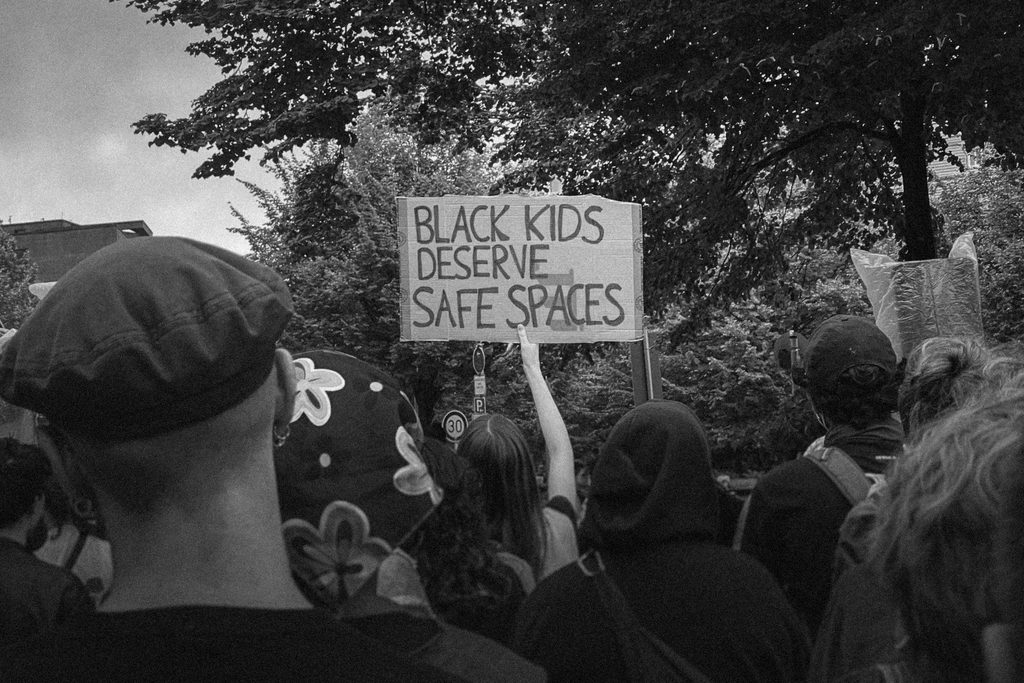
In some ways, I wasn’t entirely surprised by the fact that some white folks lost their minds over a couple of Black kids wanting a public swimming pool to themselves for six hours. They sent ugly messages threatening violence against EOTO, the Black-led organisation that planned the event, and presumably against the kids themselves, which of course led to the cancellation of the event.
I’m not surprised that white anger trumps Black joy.
What I am surprised by was the level of the discourse around it. It all just sounded very… behind. Words like “segregation” and “apartheid” were thrown around because a Black organisation booked a pool that any organisation can book exclusively for its own members. And indeed some organisations have done so with no issues.
That level of discourse in 2026 Germany felt to me like America in 2020. For those at home counting, that’s six years behind. Or, going by the comments I saw on Instagram claiming “reverse racism”, I’d double that. It was 12 years ago that Aamer Rahman got viral on YouTube with his joke about reverse racism definitely being a thing.
I started swimming semi-regularly in late winter/early spring this year. About once a week, I go to the big swimhall at Landsberger Allee. I like it mostly because I like the layout of the changing rooms. But it’s also spacious, 50 metres long, and right next to the ring.
What I don’t like about it is the fact that it feels like every other week, the pool is closed to the public because some event – often linked to some group or club – is happening in there.
It’s also worth noting that every single time I go to that swimhall, there are at most two or three other Black people there. Because public swimming pools – objectively speaking – are not spaces we’re dominating in Berlin. But then again, it’s not like there’s an overwhelming number of us in this city either.
“I did not know how little a Black presence I was going to encounter,” my friend Kay wrote to me after she visited last year. “I assumed it was more diverse than it was. It sort of shook me.”
Earlier this year, I watched Letters from Wolf Street, a documentary film by the Poland-based Indian director, Arjun Talwar. At the time he made the film, he’d been living in Warsaw for over a decade and spoke perfect Polish. It’s a film about migration and identity and the limits of assimilation.
There’s a scene somewhere towards the middle that’s stayed with me since the first time I saw it. Arjun’s therapist was trying to explain Poland and the Polish psyche to him, and she said that if you’re a guest in Poland and behave like a guest, the Poles are fine. They don’t mind. But if they feel like you’re trying to take something away from them – that’s when things become tense.
It stayed with me because it reminded me of Malaysia.
To this day, I always do propaganda for Malaysia. Whenever I get the chance, I tell people what a great place it is to visit. Beautiful islands. Gorgeous hikes that end in refreshing waterfalls. And pound-for-pound the best food in the world.
But living in Malaysia as a migrant – especially as a Black migrant – is a whole other story.
Malaysia made me feel like I was asking for too much when I was only asking for the bare minimum: a roof over my head, a bank account, and the ability to move around without being harassed.
KL doesn’t have the housing issue that Berlin has, but good luck getting an apartment as a Nigerian. You’d see an ad, call the agent, and inevitably, they’d ask where you’re from. And if you find yourself in the unfortunate position of saying “Nigeria,” they’ll either make up some excuse, or straight up tell you that the landlord doesn’t rent to Nigerians.
Two banks I’d been with for years decided to close my accounts with very little notice because – all of a sudden – as a Nigerian, I’m “a fraud risk”. Even though I’d banked with them for years – 13 years with one of them in particular – and they could see all my transactions in and out, for all those years, and there had never been any irregularities.
Moving around for me was not just inconvenient because of the bureaucratic clusterfuck of flying to Sabah with a Nigerian passport, but also all the regular unnecessary police stops when driving at night. Once, it even happened in the middle of the day; a check they said was routine that somehow ended up with me at the police station.
Another time, I made eye contact with a cop at a traffic stop, and they proceeded to follow my friend and me for about three blocks, even turning on the siren at some point, only to ask, after we pulled over, if my friend – the one who was driving – is actually my girlfriend.
It’s happened so many times I can’t count; cops asking if I and a Malaysian woman I happen to be in the proximity of, are dating. Sometimes even without a woman being present, they’d ask if I’m “here sleeping with our women.”
I never felt like that in Berlin. Not when I was visiting, and not now that I live here. In fact, that’s one of the main reasons I moved here.
The first time I travelled back to Nigeria from Berlin, I told my family that my favourite thing about living in Germany was that I was able to use the automatic gates at the airport when exiting (or entering) the country. Because even though autogates exist in Malaysia – and I had a long-term residence pass – I still couldn’t use them because of my passport.
Nigerians still need to go face an immigration officer, who would often ask questions they already have answers to (because it’s on the residence pass), before stamping a stamp that reminds you exactly how much longer you can remain in their country for. It’s an exercise that puts you in your place, reminding you that you are indeed just a visitor, never a resident.
The first time I visited Berlin in 2013, I felt something release inside me. I was – literally speaking – on holiday from Malaysia. But it was also a holiday from my Malaysian self in a way that I didn’t feel in other places I’d visited. In fact, I didn’t even realise that I was constricting my chest until I felt it start to slightly expand when I got here.
In Berlin, it felt like nobody really cared how I looked. I still felt very black, obviously – Berlin isn’t as diverse as you’d think (“only in terms of sexuality,” my friend Manu once joked) – but it didn’t feel like my blackness was constantly being weaponised against me. I never felt that when I meet new people, they’re immediately suspicious of me, and that my first course of action is to disarm them by being overly polite.
My friend Alexia thinks it’s because of how I dress. Apparently, I look like a creative, which isn’t very threatening.
This is not to say that I have never experienced any microaggressions in Berlin, or even incidents that might be considered racist. It’s just that when those things happen, my interpretation is that they happened because I’m an Ausländer – a migrant – and not because I’m black.
Or at least not ONLY because I’m black.
I felt – and believed – that whatever experience I’d had would just as likely have happened to someone from South or West Asia, or really anyone from the Global South. I didn’t feel personally singled out, and there was some comfort in that.
But right now, something is starting to feel different. The pool incident bumped against my worldview, and a crack is now starting to form across it.
Because a lot of those kids – maybe even most of them – are not actually migrants. They’re German kids. Kids who were born and raised here. Kids for whom German is a first language; often, their only language. The only thing that makes them different from other German kids is the melanin content in their skin.
That same Friday that the kids were supposed to be swimming, I was at the mosque I usually go to for prayers in Wedding. For whatever reason, a lot more people than usual came for the 1:30 p.m. session that day. So much so that the rows started to spill out onto the pavement on the street.
Just before prayers started, I saw a white woman cycling towards us – not on the bicycle path that’s on the road, but the pedestrian path we were standing on – and she looked kind of annoyed when she swerved off the path away from us and onto the street.
Prayers started shortly after, but the whole time I was standing there, I kept thinking of the people behind me praying on the pavement. I kept thinking of white Germans seeing this as an inconvenience. An encroachment. Seeing it as evidence of us not being mere guests, but people actively taking something away from them.
Momentarily taking away access to the pavement, yes, but also taking away their culture in a more metaphorical sense. And like the therapist said in the documentary, when they feel like you’re taking things away from them, that’s when things get tense.
On the street, I wondered if someone would report us. I wondered if the mosque would be fined and forced to send people away once the inside is full. I wondered what that would mean for this community that is making me feel a little more at home in this city.
But also, I thought of the recent CSD attacks. I thought of the election flyers currently hanging all over the city with Islamophobic dogwhistles and calls for “remigration”. And I thought how easily someone could decide to take matters into their own hands, turning that violence promised to EOTO onto us.
I kept wondering – thoughts going in and out of my mind – when I should’ve been praying, all because some white people who weren’t even planning to go to the pool that day got mad at the thought of Black children splashing around in water, laughing and playing – having a tiny moment of joy to themselves in a space they wouldn’t otherwise be in.