At passport control, on my way out of Malaysia for the last time, the immigration officer asked for my visa. I remember getting annoyed. I’m leaving for good, I thought, why does it matter where my visa is?
Some days earlier, I’d sent my passport over to the immigration office to have my work permit cancelled. I didn’t understand why I had to send the physical passport, given that the work permits had been digital for at least 2 years at that point. There was no sticker in my passport to cancel, so why send it in?
I did anyway, and when it came back, there was a paper attached that said the visa was cancelled along with the number of days I could continue staying in the country for: 14.
I realised then, at the airport, that was the paper they needed, to see if I’d overstayed. I dug out the paper and passed it to the officer, and when they were satisfied, they stamped my exit.
As I waited for the aerotrain to come take me to my gate, I realised that it was the first time in 18 years that I was leaving Malaysia without a return ticket.
I had this conversation with my mother once about identity.
“What are we?” I asked her. “Hausa, or Fulani?”
The answer, for my mom, was simple. Because even though we’re ethnically Fulani, ancestrally speaking, to her, we are Hausa because we speak Hausa. Because we live in a predominantly Hausa community and observe predominantly Hausa traditions.
I saw the logic in the answer, but I did not like it. I think of Fulani people as noble and scholarly, and I wanted to be a part of that more than what I considered to be a very normie Hausa culture.
And why can’t I be Fulani, I thought, if my ancestors were Fula?
In University, I lived in Malaysia only geographically; spiritually and culturally, I lived in sub-saharan Africa and parts of SWANA.
I lived in an apartment off-campus with two other students from Nigeria, whom I mostly spoke Hausa with. And most of my friends outside of that were other African students whom I conversed with in English. All of us ate Yemeni food.
Other than the two Malaysian friends I occasionally hung out with, the rest of my contact with Malaysians was either when I interacted with University administrators, or when I was being harassed by cops.
The plan had always been to leave right after I graduated. I didn’t make much effort at integrating, because Malaysia was never meant to be a long-term place.
In my second to last year of secondary school, I was the top student in my year in Hausa studies. On the speech and prize-giving day, which happens at the end of every academic year, the person who awarded me the Hausa prize was the Fulani father of one of my classmates.
When I shook his hands, after I took the award, he said, off-handedly –
“Funny, isn’t it, that the best Hausa student is Fulani.”
And that, to me, was more prize than the one I was holding. I was elated that I was recognised as Fulani by an undeniably Fulani man – one who lives in a majority Fulani region, who speaks the language, and who physically imbues the culture.
And that he saw me as one of them not because I spoke the language or practised the culture, but because I physically looked it. My face was my ID.
I didn’t leave Malaysia after University. Instead, I got a job, moved to KL, and found myself working in a company that mostly served an American customer-base. As a way to counter the mostly-white office I went to every day, most of my friends outside of work were Malaysian.
To describe my friends in Politiko terms, they were Bangsar-type Urban Liberals, even if most of them lived in PJ. In the beginning, we hung out in SSTwo and Central Market Annexe. At some point, Publika was where all the cool events were, and Art for Grabs was at Jaya One. By the time I left, we were always at Kampung Attap.
One time, after a 3-week trip back to Nigeria, one of them picked me up from the airport and asked if I wanted to get something to eat before he dropped me back home.
“Yes,” I said. “Let’s go to Kanna. I really miss their roti canai.”
Earlier this summer, my friend Sonia and I sat outside a hand-pulled noodle place in Berlin-Wedding for dinner.
Sonia was born in Malaysia, and lived there till she was 11, after which she moved to Europe, only visiting occasionally. Even though she has a Malaysian parent, she has no Malaysian citizenship, and like me, does not speak the language.
But she has an emotional connection to the country. Every time we meet, Malaysia always finds a way of coming up. It’s an integral part of our friendship.
Halfway through our meal, two women who looked to be in their early 20s walked up to us.
“Excuse me,” the one in front said, “are you guys Malaysian?”
We both took a beat, not sure where this was going.
“It’s just that,” she continued,“I heard you talking, and your accent sounded Malaysian.”
“I’m Malaysian,” she clarified, smiling.
“I’m Malaysian, yes,” Sonia said, returning her smile. “From PJ.”
“I’m from KL,” the young woman said, “but I grew up in Sabah.”
“And you?” she turned to look at me.
“I lived there for some time,” I said.
“I knew it,” she said excitedly, turning to her friend. “I was right.”
We talked a little bit. She’d just moved to the city to study and lived around the corner from the restaurant.
“Have you ever been clocked as Malaysian in the wild?” I asked Sonia, after the women left.
“No,” she replied.
“Me neither,” I said. Except of course, I didn’t have to say that.
Some identity, you’re born with. Some you achieve. And some is thrust upon you.
I was born Fulani. I did not do anything to get that ethnicity, and I can never be invisible in that identity because my face will always betray me.
Nigeria was thrust upon me. I did not seek it. And even if I choose to hide it, which I sometimes do, I can never cross a border without it coming up. Best-case scenario, a certain song or food that I did not grow up with comes up, and I have to tell them “No, I’m not from that part of Nigeria”; worst-case, I’m suspected of not being entirely trustworthy, and then I have to work overtime to prove that I’m a person.
Malaysia is more complicated.
Since moving to Berlin, I’ve had people ask me where I’m from, and the simple answer would be to say Nigeria and move on. For the most part, it does the job, because my face matches the continent, so no further questions are necessary.
But I’ve also spent more time in Malaysia than Nigeria. I moved there when I was 17 and didn’t leave till I was 35. I became an adult in Melaka. It was the first place I had a room to myself. First place I didn’t have a curfew. I had my first romantic relationship in KL and my first heartbreak. I became an artist in Malaysia. Far from my family, it was in Cyberjaya that I learned how to rely on friends, and also how to be one.
Without meaning to – sometimes while actively trying not to – I was shaped by Malaysia for better and for worse.
Better, because it made me face myself and learn who I am. Worse, because that self-perception was through a distorted mirror shaped by Malaysia’s perception of me as a black man that is also Nigerian.
My very relationship with Nigeria and Nigerian-ness is shaped by Malaysia’s perception of Nigerians. To this day, when I look in the mirror, what I see is some version of what I think a certain kind of Malaysian person would see when they look at me.
Everything I do — the way I carry myself — is for the Malaysian gaze.
You cannot go to a place and interact with a people, have your body nourished by their food and your mind by their art and culture; you cannot do that consecutively for 18 years of your life starting as a teen, and not have some of that alter you in some significant way.
There are cells in my bones that were formed from Calcium I got from foods grown at a farm in Lenggong. Vitamin D from an early morning stroll in Pantai Tengah.
Right now, I have neurons in my brain that will stay with me for the rest of my life that first fired when I moved to KL. Malaysia informs what my eyes focus on, and what they avoid. My tongue is tinged with Malaysia, even when it’s just sitting quietly inside my mouth.
And yet, my Malaysian identity is completely invisible to most. I do not look it. It will not come up at a border. And I will never be judged for it by governments or strangers.
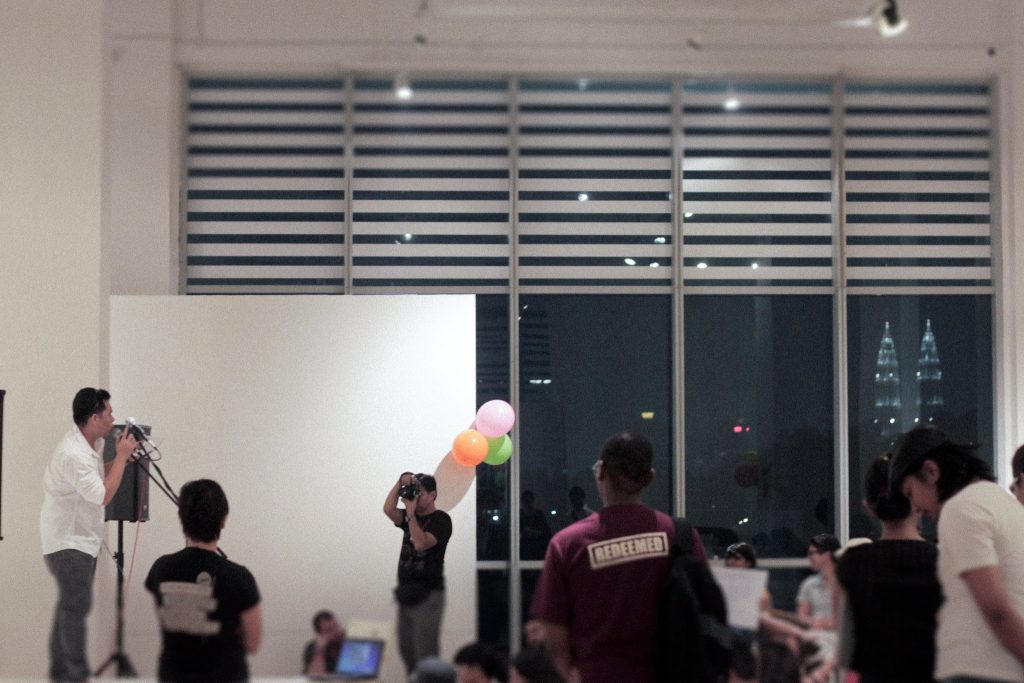
But if you spend any amount of time with me, and you know what to look for, even on the haziest of days, you’d be able to see the twin towers — clear as day — reflected in my eyes.